The creative-office fit-out that defines Santa Monica — exposed structure, open plan, glass everywhere — photographs beautifully and works badly the moment somebody needs a private conversation. Frosted film is the standard fix, and there is considerably more range in it than most tenants realise.
What frosted film actually is
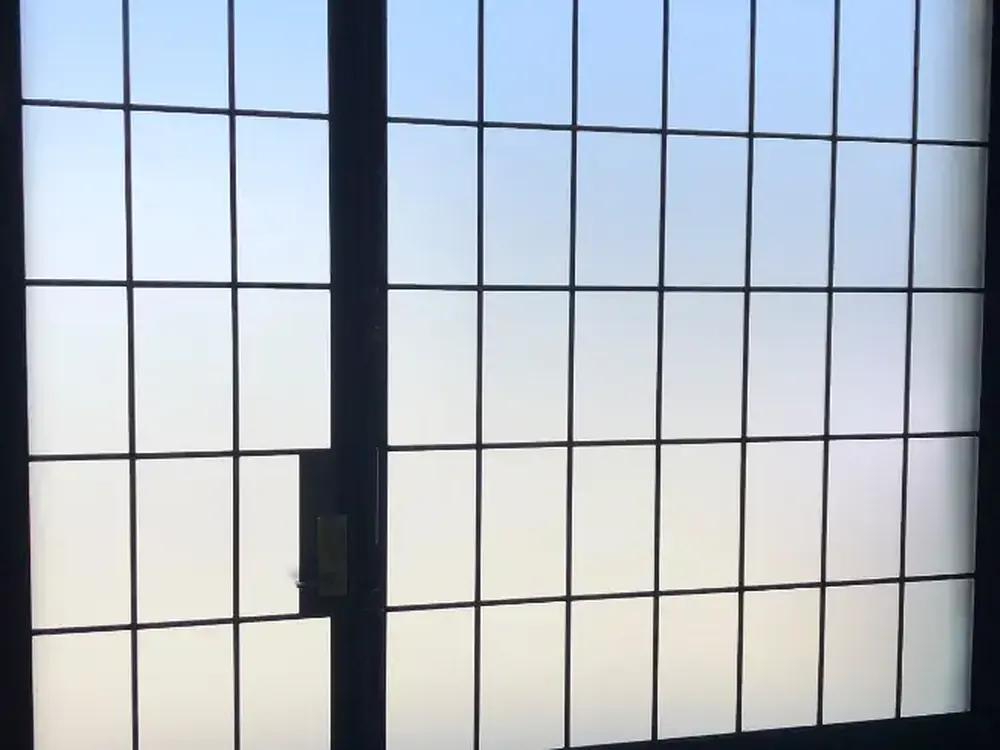
Frosted film is a matte polyester laminate that scatters light rather than blocking it. On glass it reads as sandblasted or acid-etched — the classic diffused look — at a fraction of the cost of replacing the pane with real etched glass, and it installs in an afternoon instead of a lead time measured in weeks.
The critical property is that it diffuses without darkening much. A fully frosted conference wall still passes daylight into the interior of the floor plate. You lose the sightline, not the light, which is the entire reason anyone specified glass partitions to begin with. That's what frosted privacy film is for.
Four ways to use it
Full coverage is only one option, and frequently not the best one:
- Full frost — total privacy, maximum light. Right for HR offices, medical rooms, and restrooms.
- Banding — a horizontal frosted band at seated eye level. Privacy where people sit, clear glass above and below.
- Gradient — frost fading from opaque at the base to clear at the top. Reads as intentional design rather than retrofit.
- Cut graphics — logos, patterns, and wordmarks cut from frost film. Branding and privacy from one layer.
Banding is the option nobody asks for and most end up choosing. It handles the actual privacy problem — people at desk height — while leaving the room feeling roughly twice as open as full coverage does.
The code requirement hiding inside the design decision
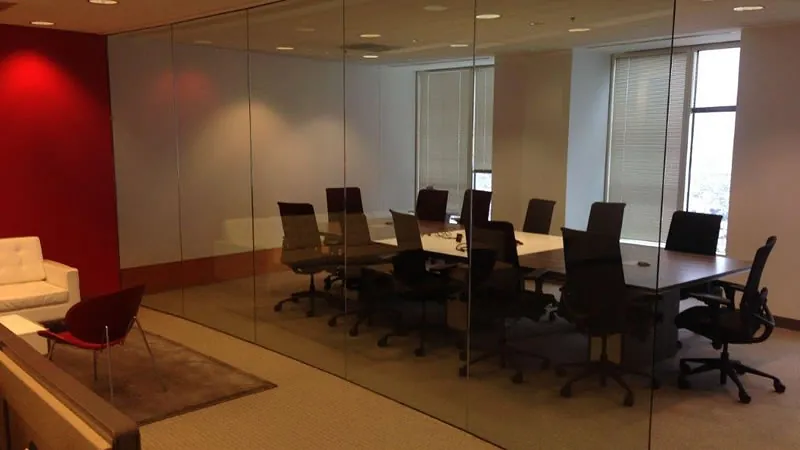
Full-height clear glass in a commercial space generally needs a visual marker so people don't walk into it. It's an accessibility issue as much as a safety one, and a lot of buildings satisfy it with a single vinyl dot at eye level that nobody wanted and everybody notices.
Frosted banding or a cut pattern meets the same requirement and looks deliberate. If you're already treating glass for privacy you're solving both problems in one scope — worth raising with your architect or landlord early, because it's meaningfully cheaper as one job than two.
It comes off when the floor plan changes
Tenant improvements move constantly in this market. Teams grow, departments swap floors, and the conference room becomes three offices. Etched glass is a permanent commitment to a floor plan with an average life of about four years. Film comes off cleanly and goes back on in the new configuration.
The same logic covers branding — a rebrand means new cut graphics, not new glass. And at lease end the film comes off and the landlord gets clear glass back, which is usually what the lease requires anyway.
Interior glass and perimeter glass want different things
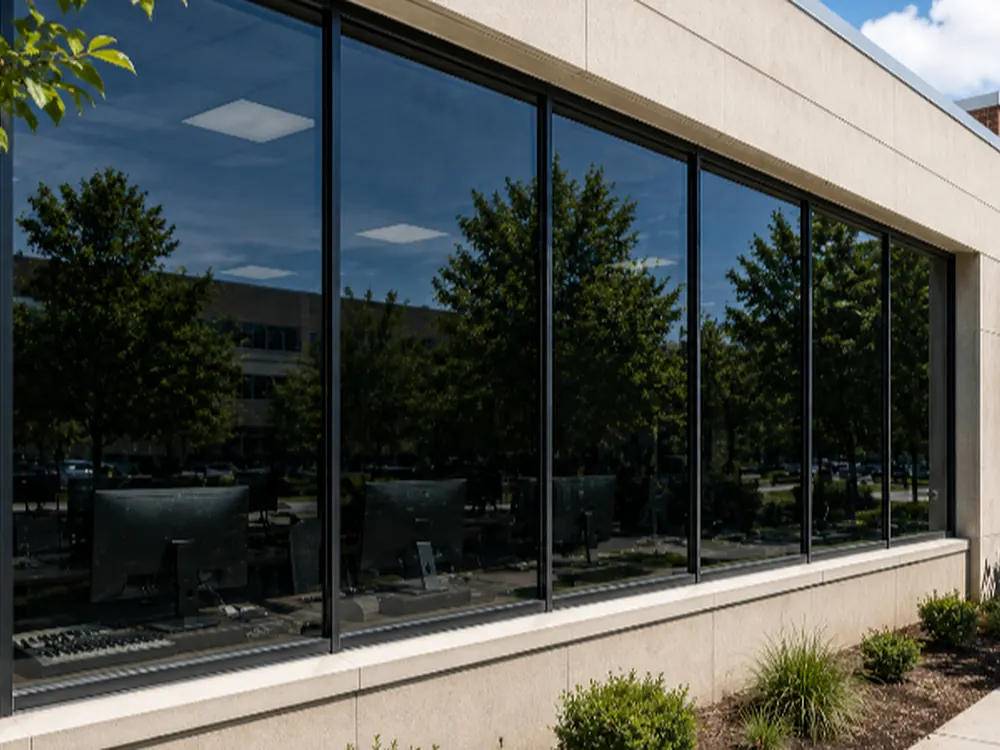
Interior partitions want frost. Perimeter glass almost never does — out there the problem is glare and heat off the water, not sightlines, which puts it in commercial window tinting territory. Nearly every office project we do ends up as a mix, specified room by room.
If you're planning a fit-out, or fixing one that isn't working, send us the floor plan. We'll mark up what each area actually needs and quote the whole thing as one scope.