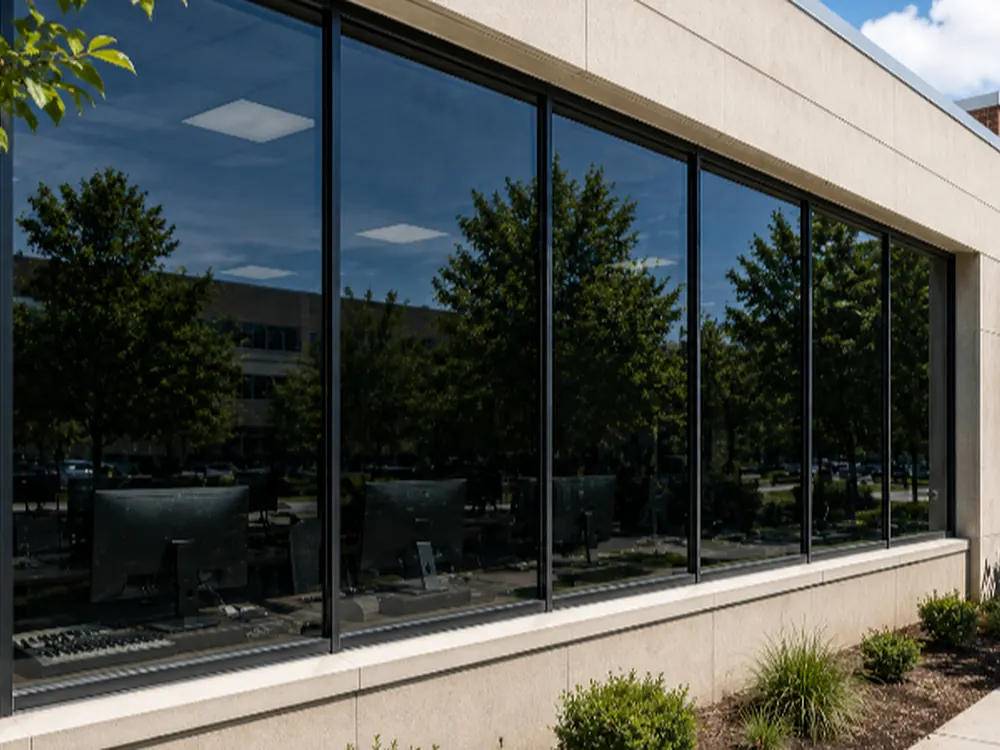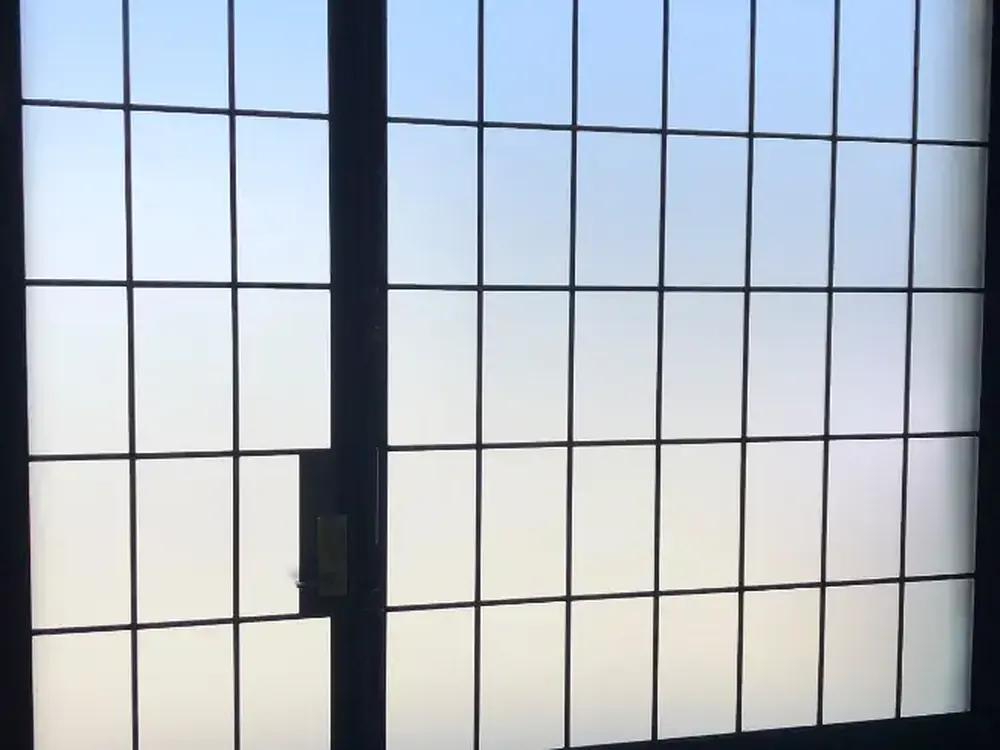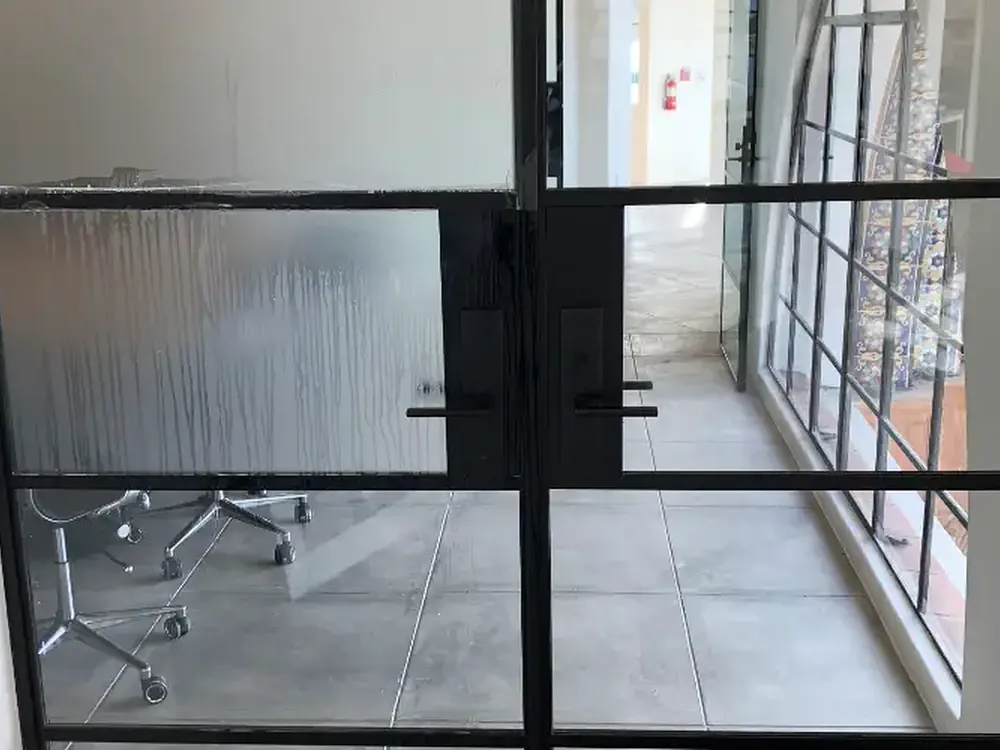
Retail glass on the Promenade, Main Street, and Montana is doing two contradictory jobs. From ten to nine it's a display case that has to disappear. From nine to ten it's the least defended surface of the building. Most of the money spent on that second job is spent in the wrong place, so it's worth being precise about what each option actually does.
Tempered glass is a safety product
Almost every storefront lite is tempered, and most owners treat that as a security feature. It isn't one. Tempering is a heat treatment that changes how the glass fails — into small blunt granules rather than long blades — which is a genuine safety improvement and why code requires it in storefronts and doors.
But read what that promises. It describes what happens after an impact succeeds. A tempered pane struck hard enough doesn't crack, it disintegrates, instantly and completely, leaving a wide clear opening. From the point of view of someone getting in, that's a better outcome than annealed glass, which at least leaves jagged pieces in the way.
What security film does instead
Security film is a thick, optically clear polyester laminate bonded to the interior face. When the pane is struck it still breaks — film does not make glass unbreakable — but the fragments stay bonded to the laminate. Instead of an opening you get a cracked, sagging, still-in-place sheet.
The value is in the time that creates. An entry planned to take three seconds now takes repeated loud swings at a pane that keeps refusing to open, on a street with foot traffic and cameras. Most attempts are abandoned partway. That's the whole proposition of commercial security film: delay and noise, not invincibility.
The detail that separates real installs from nominal ones
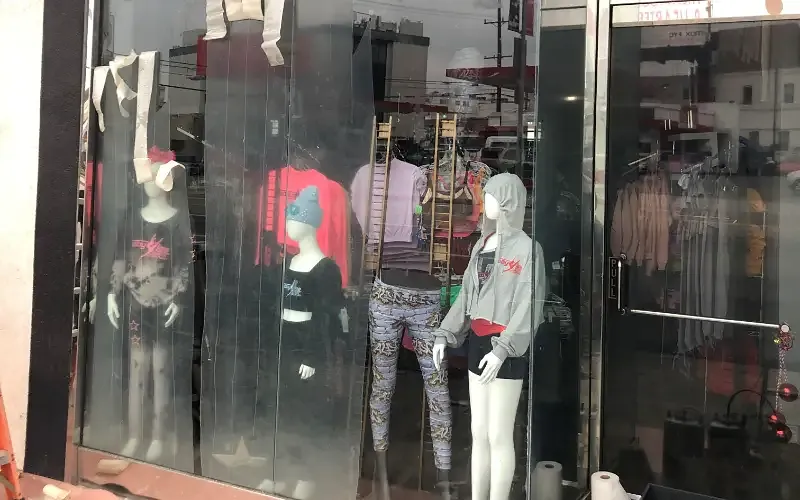
Here's what most quotes gloss over. If film is applied only to the visible glass, a determined attacker can eventually push the entire filmed pane out of the frame in one piece. The film held the glass together and then the glass left the building — which is a very expensive way to achieve nothing.
The fix is a structural attachment system: either a wet-glaze silicone bead or a mechanical batten bonding the film's edge to the frame itself. Now the pane can't be pushed out and you get the delay the film is actually capable of. Attachment method, not film thickness, is the line item to compare between bids.
- Daylight applied — film stops at the visible glass edge. Fine for containment, weakest against forced entry.
- Edge-to-edge — film runs under the glazing bead. Better bite, moderate improvement.
- Wet-glazed — structural silicone bonds film to frame. The standard for genuine security work.
- Mechanically attached — an aluminium batten anchors the system. For blast and high-threat applications.
Two quotes naming the same 8mil film can be doing fundamentally different things depending on which of those four they've assumed.
Where gates and alarms fit
None of this replaces an alarm, and film is not a substitute for a roll-down gate where a gate is permitted and appropriate. They occupy different points in the sequence: film buys the delay, the alarm summons the response, and the gate is a visible deterrent that stops the attempt being made at all.
The reason film comes up so often on the Promenade and Main Street is that gates are frequently not an option — design guidelines, landlord requirements, and the simple fact that a gated frontage reads as a neighbourhood in trouble. Film is the answer that leaves the storefront looking like a storefront.
What we'd actually recommend
For most independent retail here, the honest scope is smaller than the one that gets quoted. It's the door glass and sidelights, the ground-floor panes not overlooked by the street, and any display case holding high-value stock — not every pane in the frontage.
If the same glass also gets tagged or etched, anti-graffiti film covers the vandalism side of the same panes and is worth combining into one visit. Want a straight assessment of which openings are genuinely exposed? Book a walkthrough — no charge, and we'll tell you which panes need nothing at all.